If you’re interested in joining the lab as either an undergraduate or graduate student…
Q: What advice do you have for getting involved in psychology research and experiential opportunities as an undergraduate?
A: I’ve compiled some advice for UCSC students here. You can also learn about my work, the lab, and the research process by watching this video.
Q: What can I learn from this lab?
A: Students tends to learn about statistics, coding of qualitative data, and collecting and cleaning psychophysiological data. They also learn about collaboration and team science, and students involved in independent research projects tend to gain a lot of statistical knowledge. For undergraduate students, please keep in mind that we may be managing data and may not have active data collection occurring all quarters. When we have active data collection, you can learn about protocols for working with youth. Please be clear when applying if this is your goal.
Q: Great, but what methods can I learn from this lab?
A: We believe that methodologies should be determined by the research question, and that the use of multiple approaches can produce some of the richest results. Common approaches in the lab include psychophysiological and biological data collection, daily diary methods, surveys, longitudinal approaches, lab-based and quasi-experimental approaches, and interviews.
Q: Does this lab study clinical psychology?
A: Although we study mental health and employ theories from health psychology, the lab is not focused on clinical psychology. We can measure levels of depressive symptoms among youth, but we generally are not specifically recruiting people with diagnoses for our studies.
Q: Should I apply if I am interested in studying infants?
A: The lab specifically studies adolescence (ages 12-24), so this lab would not be a great fit. I strongly recommend that you look up my colleagues in developmental psychology at UCSC.
If you’re considering whether to apply to a graduate program…
Q: I want to go to graduate school but am unsure if I should pursue a master’s degree, a PsyD, or a PhD?
A: I found this guide very helpful when deciding what type of degree program to apply to. Additionally, you can also refer to this graduate school decision tree to figure out which degree program would be the best fit for you.
Q: Do I need a Master’s degree? Do I need to have majored in psychology or public health?
A: No! There are no course requirements, although you need to have enough familiarity with psychology to know that this is the field that you want to pursue.
Q: Where do I get started!?
A: APA has some great resources:
Q: Is there a fee waiver available?
A: Please reach out to the department to inquire about fee waivers. Typically programs have these but don’t advertise them well.
Q: How do I choose who to apply to?
A: I recommend searching key terms in google scholar that are of interest to you and reading recent publications. If you already have universities of interest (due to geographic preference or institutional ranking) searching the faculty interests for universities that you are interested in. It’s fine to apply to different programs (e.g., developmental psychology, human development and family studies, social psychology). You should generally prioritize fit with the faculty member, but having a fit with the program is important since you will be taking courses in this topic area and have a cohort with shared interest in this area. I typically recommend applying to multiple programs and looking for programs where you can work with multiple faculty. Typically when applying you should have one primary adviser in mind, with a secondary adviser (potentially in the same or a different area) whom you can get advice from.
Q: Can you tell me more about your work before I apply?
A: Please start by reading the web site thoroughly and reading about recent projects and publications. You can then reach out to other people involved in the lab to hear about their day-to-day experience. You can also reach out to me at drahal@ucsc.edu if you have specific questions, but keep in mind that I will likely direct you back to the web site if you ask me to tell you generally about the lab.
If you’re interested in becoming a graduate student with this lab (or otherwise)…
Q: What does the graduate application process look like at UCSC?
A: You’ll submit a personal statement and a research statement. At the end of the research statement, it would be ideal for you to explain the mentors with whom you are potentially interested in working and why. We have informal interviews, so you might hear from me over the winter break after the application deadline. If the position is a good fit, you may be flown out to visit the campus and meet the rest of the department.
Q: Do you only accept students through the Developmental Psychology program?
A: Yes. I can serve as a secondary mentor to students applying in social psychology or cognitive psychology. We do not have a clinical psychology program.
Q: What does the secondary advisor role refer to?
A: A secondary advisor refers to another faculty member that you can get feedback or advice from—or, even better, they might also be someone you can conduct research with!
Q: How can I know whether a PhD is a right fit for me?
A: They often say that deciding to apply is the hardest part of the application. Having a curiosity for research based on past experience in a lab is a great sign. Being admitted to a graduate program should give you the opportunity to pursue your interests–despite potentially long hours, you get to learn and complete work that you are passionate about. A lot of people default to applying to a PhD program right after their undergraduate degree because they want to have a next step already planned for them, but it’s important to remember this degree program specifically trains people to pursue a career in research. People who plan to ultimately work in industry or technology are welcome to apply, but should keep in mind that they may not need a PhD for that degree program. Please see this excellent flow chart of program options: https://drive.google.com/file/d/12nDYF5aoGlm9Ujdc7PjWKnzpivZE58et/view?usp=sharing
Q: Should I be a clinical psychologist?
A: At UCSC, Drs. Hannah Raila, Kim Cardilla, and Andrea Cook all have doctorates in clinical psychology, so I strongly recommend reaching out to them. They often lead sessions regarding how to apply for clinical psychology programs. Please also see this incredibly thorough and helpful resource: https://mitch.web.unc.edu/wp-content/uploads/sites/4922/2017/02/MitchGradSchoolAdvice.pdf
Q: How will my application be evaluated?
A: I review all of an applicant’s materials, including academic record, research interests, letters of recommendation, a statement of purpose, and a personal history statement. It is not merely about checking a box or having a certain GPA. Your personal statement should convey why you have committed to a PhD in developmental psychology and pursue a career in academic research, with the goal of developing an independent program of research (i.e., becoming an expert in a topic relevant to my lab). It should be clear what has motivated you to apply to the program, including my lab specifically, and what you aim to get from the program. Fit between a mentor and a mentee is crucial for both mentee success and the health of the mentor’s lab. I only accept students whom I am confident that I can support, so it is important to clarify why you think this lab is an excellent place for you to begin your research career. We all have different obstacles and life experiences that shape our research, and the personal history statement provides an opportunity for you to clarify any life experiences that I should consider when evaluating your application, as well as communicate your sensitivity to issues of diversity and inclusion and commitment to promoting the development of youth from diverse backgrounds. The lab also assesses sensitive topics including the heterogeneous experiences of youth from marginalized backgrounds, so all of our work is centered on a passion for supporting these youth and recognizing that context affects youth development. If you are accepted to the program, I may use experiences mentioned in your statements to advocate for the department to offer a fellowship, depending on eligibility and departmental resources.
Q: Are there resources for putting together a graduate application?
A: This website has varied resources: https://www.psychresearchlist.com/.
Q: What’s the purpose of a personal statement?
A: The purpose of the personal statement is to tell us about yourself and how your background experiences contribute to your unique perspective as a student and researcher. Students often make the mistake of listing personal experiences without how those experiences have prepared them to become an excellent student or researcher. Make sure to describe the specific lessons or traits that you developed from these life experiences.
Q: What makes a strong personal statement?
A: A strong personal statement should tell a cohesive story about your intellectual development, research trajectory, and fit with the program. Research experience is essential because entering a graduate program is a commitment, and we want to make sure people know what they are signing up for. The doctoral degree specifically provides training to become a researcher, so you need to clearly convey why you are motivated to be a researcher and what experiences have affirmed this decision.
You can start by briefly describing how you became interested in psychology or your specific area (e.g., clinical, developmental, social), but you should then describe your relevant research experiences that have affirmed your commitment to this field. If you do not have research experience, I strongly recommend taking time to volunteer or pursue a research assistantship before applying. Convey what you have learned from each research experience and how these skills help you to conduct your proposed research.
Explain your primary research questions or topics of interest and show conceptual understanding of psychology from your coursework. The statement should clearly convey the type of research you want to conduct. The final part of your statement should emphasize fit with the program and faculty. Each of your statements should be slightly revised for each program you submit to. You should explicitly name one or two faculty whom you want to work with and why their interests are relevant. Demonstrate that you’ve done your homework about the program by highlighting information from the web site and specific aspects of the faculty member’s work that you are interested in. Finally, close by describing your long-term career goals and why attending this program is the crucial next step.
Q: Do you have examples of personal statements?
A: Yes, please see this google doc: https://docs.google.com/document/d/11vTrJDNSXJR0w7SYhz_nYJ8oc6OA6DXAhStWrLxfaQ8/edit?tab=t.0
Q: Should I send the same applications (i.e., personal and research statements) to each institution?
A: No, you should tailor it for each and every school. The last couple of paragraphs should specifically describe aspects of the school’s program that are appealing to you, name the specific 1-2 faculty with whom you would like to work, and explain the research you would conduct with them.
Q: What is the purpose of the interview?
A: A PhD is a big commitment for both of us, and I want to make sure that the program and my mentorship can meet your needs and help you to reach the next step of your career. The major goal of the interview is to assess whether this program is the right fit. Therefore I encourage you to be open and honest, but also prepared to describe your interests and express why you think the lab is a good fit. It would also help to have your own questions prepared in advance so that you can also make sure that the program is a good fit.
Q: What questions should I prepare for?
A: You should be able to express your potential research interests and imagine a study that you would like to complete. If you read an article and have a lot of questions come to mind (e.g., Would this apply during a different developmental period? For a different demographic? What if we used a different measure?), then that is a good sign that a graduate program might be good fit. Here is a list of questions that might help in any interview.
Q: Do you have more resources for interviewing?
A: This web site has several resources for interviewing.
Q: What’s the difference between a resume and a CV, and do I need a CV to apply?
A: A CV (or curriculum vitae, “the course of life.”) has no page limit and describes all of the publications, presentations, and funding a person has in their life. Resumes normally are limited to one page, potentially two, and highlights only the relevant work experiences. If you’d like to see an example of a CV, see mine. Because students are not expected to have publications when applying to graduate school, you are not expected to have a CV when applying. Whatever you submit, please make sure it is clearly and consistently formatted.
Q: How do I get strong letters of recommendation?
A: You should cultivate relationships with faculty throughout your academic career by attending student/office hours and pursuing opportunities with faculty such as internship or laboratory research experience. Do not just ask a faculty member for a letter of recommendation because you enjoyed their class but never talked to them, as they can only describe the class and mention the grade that you received in their class. Asking questions in class, attending student hours, and taking advantage of class opportunities are all excellent ways to get to know faculty and guarantee strong letters of recommendation. If you’d like a faculty member to write you a letter of recommendation, check if their website has instructions for requesting one (mine is under the Mentorship tab) and send a polite email inquiring if they would feel comfortable writing you a strong letter of recommendation for you. Any sign of hesitation is likely a sign that they cannot write you a strong letter of recommendation. These letters should showcase that you are able to maintain strong professional relationships with experts in the field. Letters from faculty who can speak to your ability to conduct research in your field are best. Letter writers can be from other departments but ideally should have a PhD so they can evaluate your ability to excel in a doctoral program. See here for more advice.
Q: What are the different degree requirements?
A: We have course requirements including two proseminar courses with your cohort, two statistics courses, and electives in developmental psychology as well as the other areas. See the UCSC Graduate Student Handbook.
Q: Is this lab collaborative?
A: Yes, interdisciplinary research is the future! I strongly encourage students to work in my lab as well as other labs so that they have multiple concurrent projects. Having multiple perspectives improves the project and gives students a better sense of the very different approaches that people have for conducting research and leading a lab. Graduate students are not required to collaborate with other labs, although they are welcome to attend other faculty member’s lab meetings.
Q: What does funding look like?
A: Students are primarily funded through TA-ships, with one quarter (yes, we do quarters and not semesters) without TA-ship in the first year. Students will be funded to work as a graduate student researcher through grant support when funds are available. You can learn about funding from the UCSC Graduate Student Handbook.
Q: Should I apply for funding now?
A: There is no expectation for students to enter a program with funding. However, with your application a University of California graduate program, you can submit a diversity statement. This statement will enable us to gauge whether you might be eligible for the Eugene Cota-Robles Fellowship. See here for Graduate Student Financial Aid.
Another option for all graduate programs is the National Science Foundation (NSF) Graduate Research Fellowship Program (GRFP). This highly competitive fellowship provides three years of funding. Students can submit once before applying to graduate school and once after admittance, in either their first or second year. This application involves a personal statement and a research proposal of a project you would consider conducting with your faculty mentor of interest. Students who are interested in this possibility should reach out, as this could be a great opportunity to practice writing together and learn whether our working styles are compatible. This podcast has great details about how applications are reviewed: Everything you want and need to know about the NSF. See details and examples of successful applications here: NSF fellowship
Q: How do I find housing in Santa Cruz?
A: Santa Cruz is an expensive place to live because of its proximity to the beach. Graduate student housing offers discounted housing near the university for graduate students. You can find information here: Graduate Housing
There’s also family housing available, as described here: Family Housing
If you cannot live within university housing, you can live within the community. Many students purchase a parking permit, but the city buses are free to all undergraduate and graduate students, so it may help to look at proximity to a bus route. We also have a community housing list specifically intended to assist faculty, postdocs, graduate students, and staff at UCSC in finding rental housing or posting a rental. Although not publicly available, you will have access to this resource as a student.
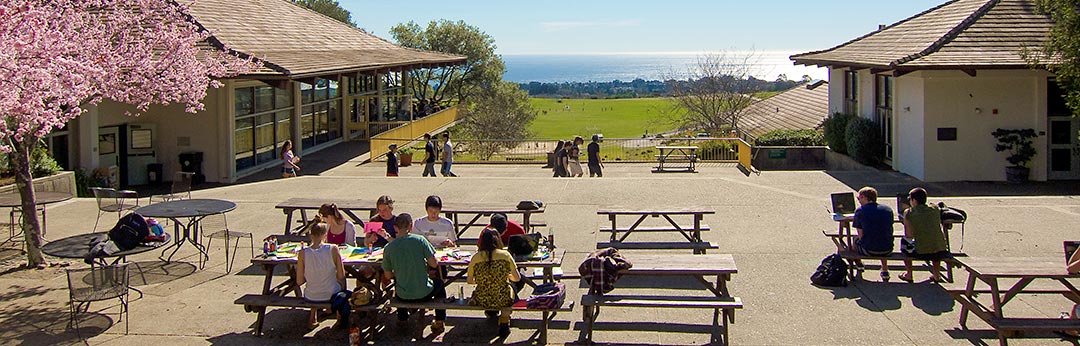
Q: What does campus look like?

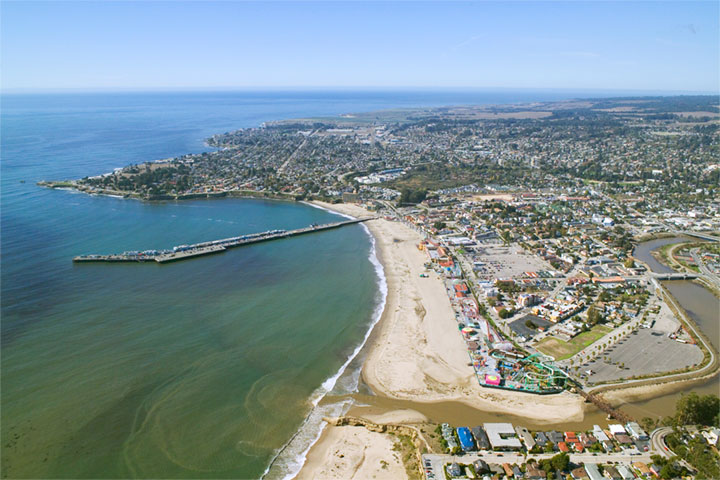
Q: What does Santa Cruz look like?
Q: How do I apply?
A: The deadline is normally December 1. Click here to apply for graduate school at UCSC.